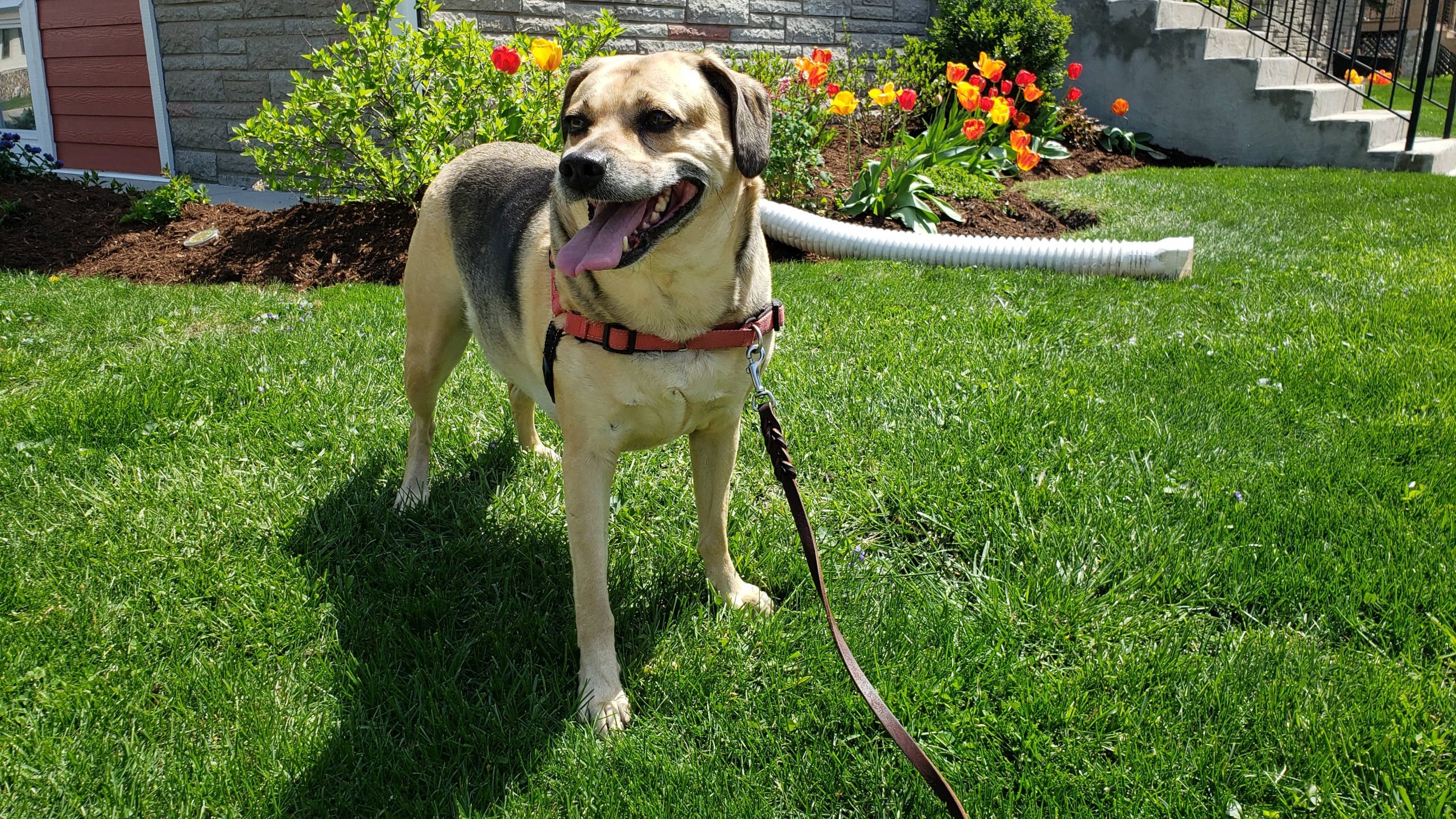
Walking a dog that constantly pulls can be frustrating, and it’s one of the most common training challenges I’m called to help with (second only to jumping puppies!). Luckily, teaching your dog to walk on a loose leash is not so difficult with the right approach, equipment, and consistency.
🦴 The Right Equipment for Success
The gear you use can make or break your training. Avoid prong, choke, shock, or Martingale collars. They don’t address the root cause of pulling and may harm your dog’s mental state.
Instead, here’s what I recommend:
-
Front-clip harness (EasyWalk): Proper fit is critical. Use the size chart and measure your dog carefully. The Deluxe model has extra padding but fewer size options. The regular EasyWalk.
-
Appropriate leash: Small dogs do best with lightweight leashes with small clasps. I prefer a 6-foot length. For larger dogs, I prefer an 8-foot x 3/8-inch leather leash. The leather is gentler on your hands than nylon or rope.
🌳 Rethink What a Walk Means
Loose leash walking starts with shifting your perspective of what a walk looks like:
-
Focus on time spent outside, not distance covered. A 20-minute walk might only cover 100 feet, and that’s okay.
-
Leave the sidewalk. Dogs quickly learn your predictable straight-line patterns. Instead, walk on grass, change direction often, and stop frequently.
-
Don’t pull back. If your dog pulls, stand still and step on the leash instead. Pulling back triggers the opposition reflex, which is the instinct to resist pressure. So, if you pull your dog will pull even more.
-
Encourage sniffing and skills. Let your dog use their nose! Sniffing is highly enriching for dogs.
-
Practice Skills. Part of getting a nice walk is teaching your dog you’re still with him! You can easily get that, while practicing skills you’ve already taught indoors, like the Hand Target and Name Response.
-
Returning to the sidewalk. As soon as you start having success in the grass, step back onto the sidewalk for a few steps. Over time, you can spend more time on the sidewalk, less time in the grass, and eventually get to what we humans consider a nice walk with our dogs.
🚫 The One Rule You Can’t Break
Never allow pulling. If you’re consistent nine times but give in on the tenth because you’re in a hurry to get home, you’ve just taught your dog persistence. This is why focusing on time over distance is so important.
🐾 Extra Tips for Better Walks
-
Skip retractable leashes. Retractable leashes don’t allow for proper leash handling, since you can’t use your second hand to guide your dog in the direction you want to go. They break easily, slip out of hands, and put constant tension on your dog, which is bad news for anxious dogs and for introductions. The constant tension counteracts the loose leash walk you’re trying to teach!
-
Try long-line walking. Once your dog has mastered loose leash skills, experiment with a 10+ foot leash. It requires two-hand management but gives your dog more freedom. Check your leash laws first as many have a length restriction. I love taking dogs to Miller Meadow on a 30-foot leash.
✅ Need More Help?
This article is based on my detailed Loose Leash Walking Guide that you can download for free. If you’d like hands-on training, don’t hesitate to contact me here.
