October 16, 2026
Does your dog bark at passing bicycles, scan constantly during walks, hesitate to go outside, or pull towards home during walks? Everyday sights and sounds can trigger signs of stress or anxiety. Desensitization is a simple concept that can help, starting with enough distance for your dog to observe without becoming overwhelmed.
These responses may be related to missed critical socialization as puppies.
Socialization for dogs isn’t just meeting other people and dogs. It’s being exposed to:
- Sights
- Sounds
- Movements
- Textures
- Smells
The concept is complete environmental exposure at a young age to prevent stress or anxiety in adolescence and adulthood. Anxiety in dogs is also often hereditary.
When dogs that miss critical socialization or are predisposed to anxiety are exposed to
new environments, they may struggle. A client of mine had a recently adopted dog that suddenly stopped relieving itself outside because of the construction noise going on around her block, and the dog began relieving itself indoors.
A passing bicycle. A delivery truck. The vacuum cleaner. Things we barely notice can be unsettling to our dogs. Your dog may well benefit from some simple desensitization if they:
- Bark or lunge at passing people, dogs, vehicles, skateboards, or bicycles.
- Display hypervigilance by turning their head toward every sound and movement.
- Attempt to retreat at the sight of the mail carrier with a cart or a tall man with a backpack.
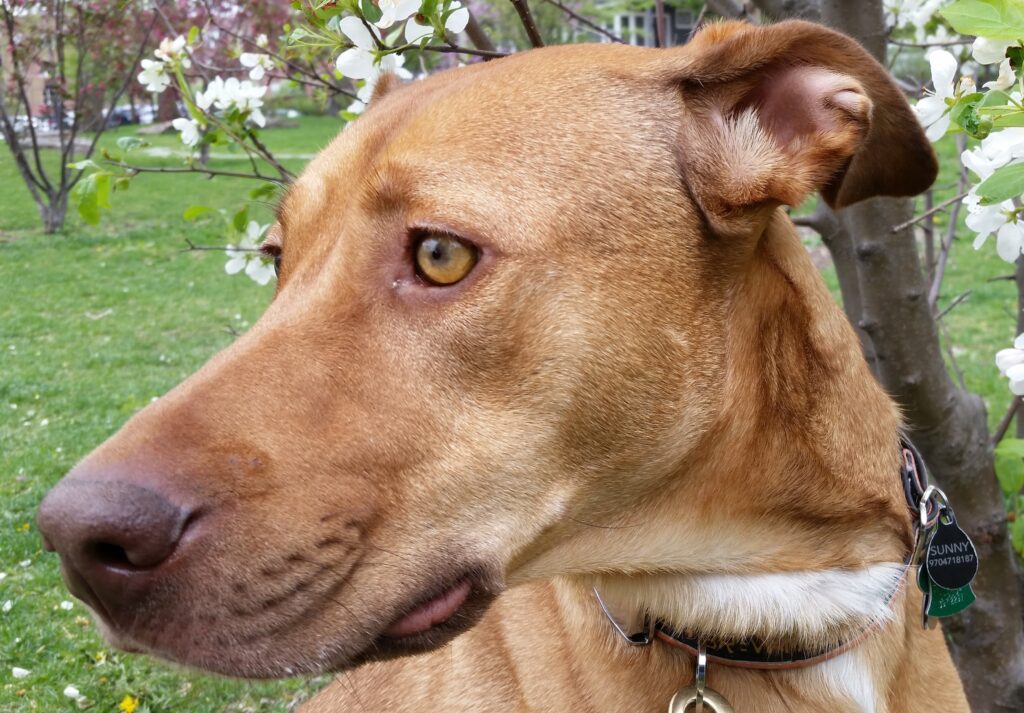
Sunny is not relaxed. He’s displaying hypervigilance by rotating his head toward every sound and movement. He has ears back, mouth closed, furrowed brow and focused on the trigger.
Even dogs who have lived with you for years can develop new sensitivities. In older dogs,
research has linked later onset noise sensitivity with musculoskeletal pain. Cognitive changes can also contribute to anxiety.
Why Your Dog May Need Desensitization
Why a dog shows signs of anxiety is less important than how to solve the problem, but common situations include:
- A puppy from a breeder has left their mother, littermates, and familiar surroundings.
- A shelter dog may have experienced street life, foster homes, or a harsh kennel environment.
- Moving from the country to an urban neighborhood adds unfamiliar traffic, sirens, crowds, and movement.
Whatever their background, your home, family, and routines are new to your dog, and giving them time to acclimate or desensitize will help.
Fortunately for dog owners, desensitization is a simple concept that’s typically easy to implement.
What Is Desensitization?
Desensitization means gradual exposure to something that causes anxiety, beginning at an intensity low enough that it does not trigger signs of anxiety or stress. Exposure increases in duration and eventually in intensity as your dog becomes comfortable.
Distance is often your most useful tool. A nearby skateboard may be overwhelming, while one going by 100 feet away may produce no visible
stress signals. Other factors include:
- Sound volume
- Movement speed
- Surprise factor
- Exposure duration
Forcing your dog to repeatedly experience something stressful will likely make the response worse.
Give Your Dog Space and Time to Adjust
Barking and lunging are often described as
reactivity, and although there is a really effective protocol to help your dog with
reactivity, especially in urban neighborhoods, you can also just give your dog the opportunity to desensitize to its triggers by increasing the distance between them and the object causing anxiety.
Choose somewhere your dog can observe without becoming tense, fixated, or distressed. If they react to someone a block away, crossing the street will not provide enough distance. An open area such as
Miller Meadow offers more space and the ability for you to control the distance.
Try a picnic without the food:
- Choose a distance where your dog can maintain composure.
- Bring a chair or blanket.
- Keep your dog securely leashed.
- Quietly observe without asking for skills or giving your dog attention.
Take note of their behavior:
- Are they constantly trying to engage you?
- Are they watching intently?
- Do they ever sit down?
- Do they lie down or lie on their side?
When your dog shows the ability to relax and maintain composure, you know it’s time to move closer to whatever causes stress. Keep in mind that the pace of progress is different for every dog. Some may be ready to move closer each session, while others need weeks at a certain distance before moving closer.
Apply Desensitization to Your Dog’s Walks
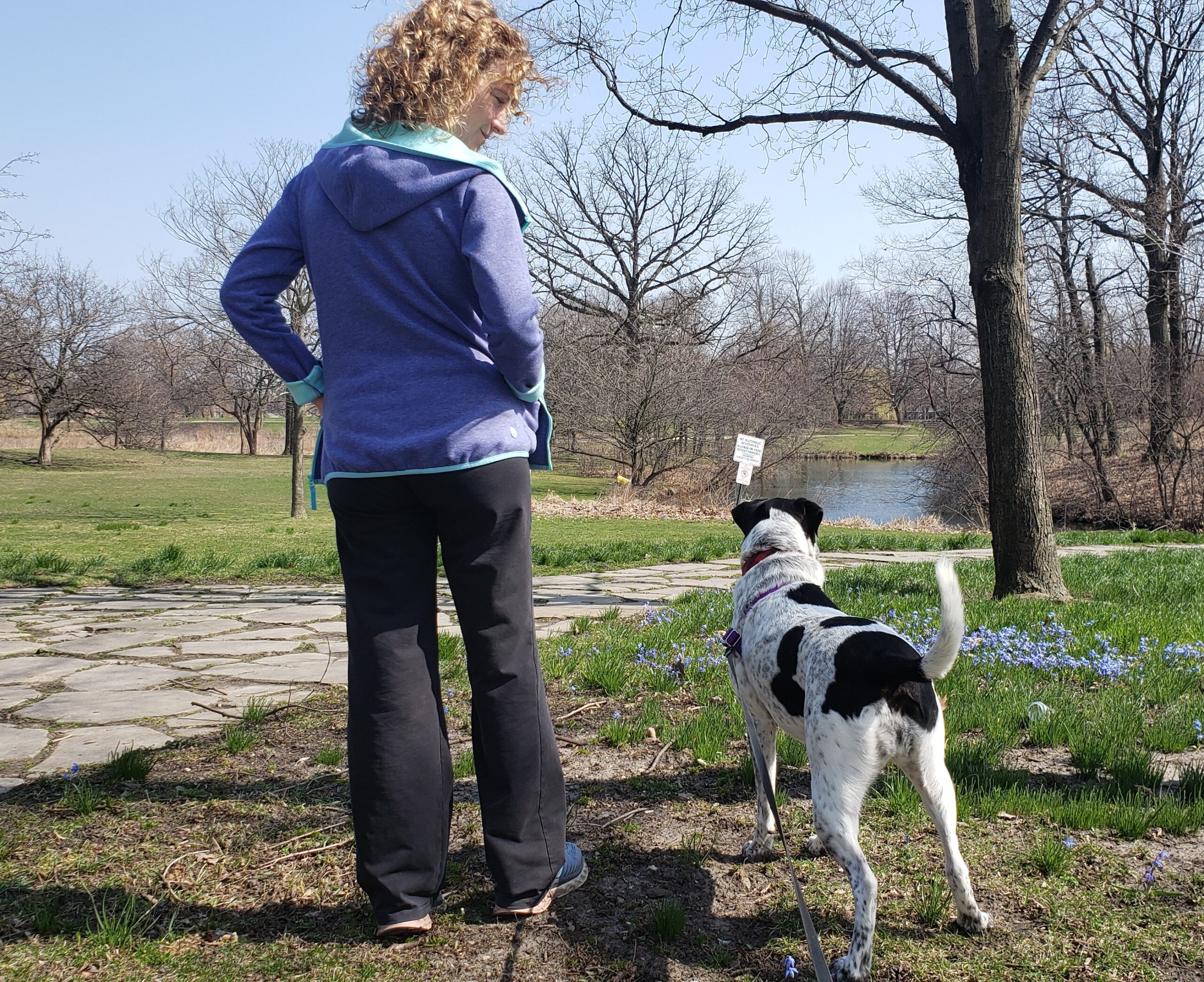
Whether your dog is reactive or pulls on leash, first, stop walking down the sidewalk. Forget about the steps you wanted to get in or the distance you felt you should cover and change your idea of what a walk looks like.
Instead:
- Explore the grassy easement.
- Allow sniffing.
- Move slowly around a tree, toward a light pole, and back to the tree.
- Try two sidewalk squares, then return to exploring.
In my experience, this helps many dogs acclimate and desensitize to their environment, which also results in less pulling, or sometimes no pulling at all. My
Loose Leash Walking guide explains the approach in more detail.
Let your dog’s
body language guide how quickly you progress.
When Your Dog Needs More Help
First, there should be no embarrassment here. Accept that every dog has its own personality, just like we do, and your dog is probably fabulous in many other ways.
If you find my recommendation isn’t working for you, you might need a little help. Reach out to me to see if we can tweak your desensitization program.
If our training session doesn’t work for you, I can help refer you to an
animal behaviorist.
Does your dog bark at passing bicycles, scan constantly during walks, hesitate to go outside, or pull towards home during walks? Everyday sights and sounds can trigger signs of stress or anxiety. Desensitization is a simple concept that can help, starting with enough distance for your dog to observe without becoming overwhelmed.
These responses may be related to missed critical socialization as puppies.
Socialization for dogs isn’t just meeting other people and dogs. It’s being exposed to:
- Sights
- Sounds
- Movements
- Textures
- Smells
The concept is complete environmental exposure at a young age to prevent stress or anxiety in adolescence and adulthood. Anxiety in dogs is also often hereditary.
When dogs that miss critical socialization or are predisposed to anxiety are exposed to
new environments, they may struggle. A client of mine had a recently adopted dog that suddenly stopped relieving itself outside because of the construction noise going on around her block, and the dog began relieving itself indoors.
A passing bicycle. A delivery truck. The vacuum cleaner. Things we barely notice can be unsettling to our dogs. Your dog may well benefit from some simple desensitization if they:
- Bark or lunge at passing people, dogs, vehicles, skateboards, or bicycles.
- Display hypervigilance by turning their head toward every sound and movement.
- Attempt to retreat at the sight of the mail carrier with a cart or a tall man with a backpack.
Sunny is not relaxed. He’s displaying hypervigilance by rotating his head toward every sound and movement. He has ears back, mouth closed, furrowed brow and focused on the trigger.
Even dogs who have lived with you for years can develop new sensitivities. In older dogs,
research has linked later onset noise sensitivity with musculoskeletal pain. Cognitive changes can also contribute to anxiety.
Why Your Dog May Need Desensitization
Why a dog shows signs of anxiety is less important than how to solve the problem, but common situations include:
- A puppy from a breeder has left their mother, littermates, and familiar surroundings.
- A shelter dog may have experienced street life, foster homes, or a harsh kennel environment.
- Moving from the country to an urban neighborhood adds unfamiliar traffic, sirens, crowds, and movement.
Whatever their background, your home, family, and routines are new to your dog, and giving them time to acclimate or desensitize will help.
Fortunately for dog owners, desensitization is a simple concept that’s typically easy to implement.
What Is Desensitization?
Desensitization means gradual exposure to something that causes anxiety, beginning at an intensity low enough that it does not trigger signs of anxiety or stress. Exposure increases in duration and eventually in intensity as your dog becomes comfortable.
Distance is often your most useful tool. A nearby skateboard may be overwhelming, while one going by 100 feet away may produce no visible
stress signals. Other factors include:
- Sound volume
- Movement speed
- Surprise factor
- Exposure duration
Forcing your dog to repeatedly experience something stressful will likely make the response worse.
Give Your Dog Space and Time to Adjust
Barking and lunging are often described as
reactivity, and although there is a really effective protocol to help your dog with
reactivity, especially in urban neighborhoods, you can also just give your dog the opportunity to desensitize to its triggers by increasing the distance between them and the object causing anxiety.
Choose somewhere your dog can observe without becoming tense, fixated, or distressed. If they react to someone a block away, crossing the street will not provide enough distance. An open area such as
Miller Meadow offers more space and the ability for you to control the distance.
Try a picnic without the food:
- Choose a distance where your dog can maintain composure.
- Bring a chair or blanket.
- Keep your dog securely leashed.
- Quietly observe without asking for skills or giving your dog attention.
Take note of their behavior:
- Are they constantly trying to engage you?
- Are they watching intently?
- Do they ever sit down?
- Do they lie down or lie on their side?
When your dog shows the ability to relax and maintain composure, you know it’s time to move closer to whatever causes stress. Keep in mind that the pace of progress is different for every dog. Some may be ready to move closer each session, while others need weeks at a certain distance before moving closer.
Apply Desensitization to Your Dog’s Walks
Whether your dog is reactive or pulls on leash, first, stop walking down the sidewalk. Forget about the steps you wanted to get in or the distance you felt you should cover and change your idea of what a walk looks like.
Instead:
- Explore the grassy easement.
- Allow sniffing.
- Move slowly around a tree, toward a light pole, and back to the tree.
- Try two sidewalk squares, then return to exploring.
In my experience, this helps many dogs acclimate and desensitize to their environment, which also results in less pulling, or sometimes no pulling at all. My
Loose Leash Walking guide explains the approach in more detail.
Let your dog’s
body language guide how quickly you progress.
When Your Dog Needs More Help
First, there should be no embarrassment here. Accept that every dog has its own personality, just like we do, and your dog is probably fabulous in many other ways.
If you find my recommendation isn’t working for you, you might need a little help. Reach out to me to see if we can tweak your desensitization program.
If our training session doesn’t work for you, I can help refer you to an
animal behaviorist.