March 5, 2026
🐾 Why the Hand Target Is a Must-Have Skill
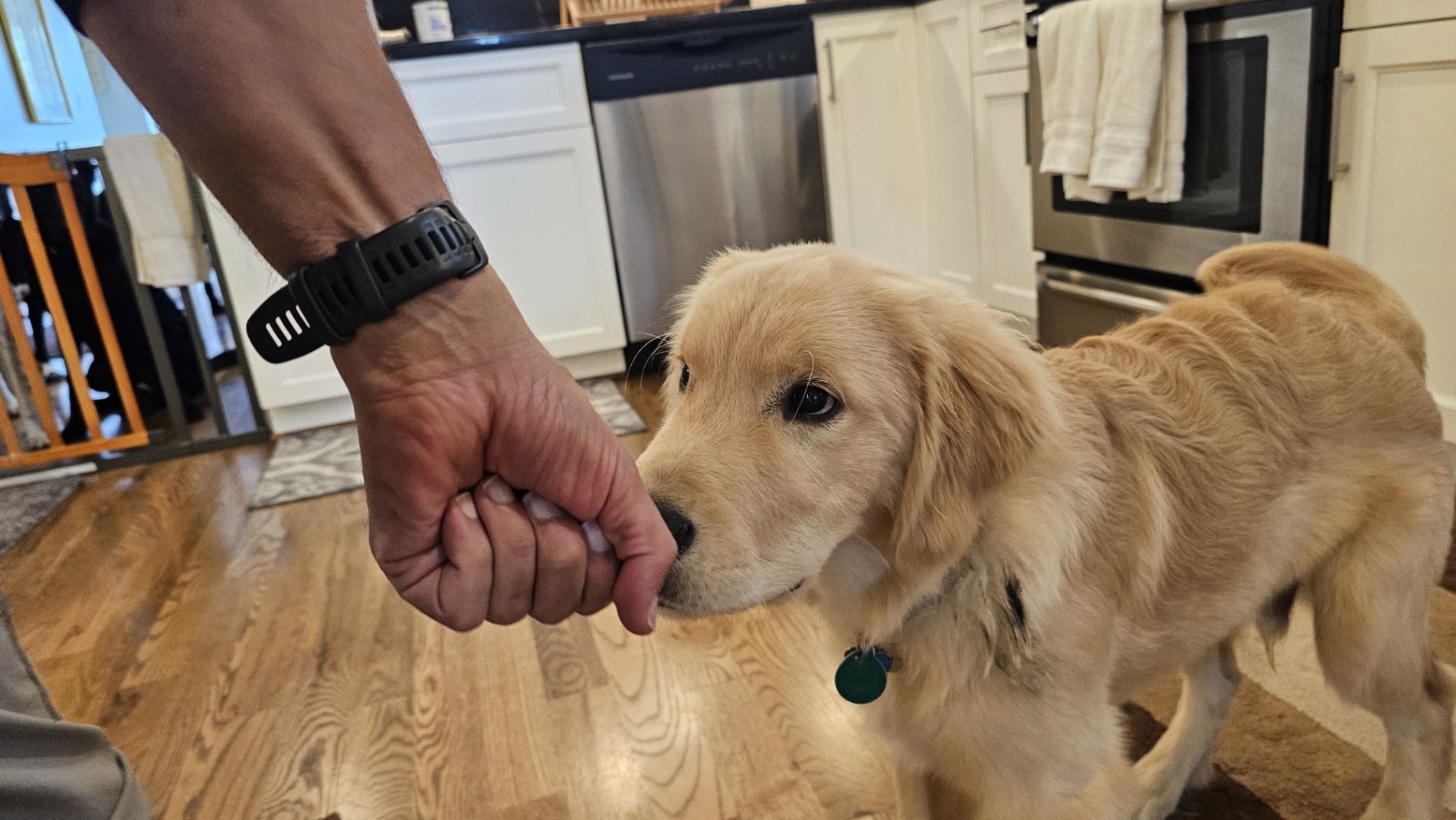
The hand target is one of the most powerful and practical skills you can teach your dog. It’s simple to train, fun for you and your dog, and opens the door to countless useful applications, from object exchange to the ever-important recall.
When your dog learns to touch your hand with their nose on cue, you’ve created a clear, reliable way to communicate. It’s not just a trick, it’s a behavior that builds trust, focus, and safety for your dog.
🐕 How the Hand Target Builds a Reliable Recall
A dog that happily targets your hand is a dog that will come to you when called. Instead of ignoring you, running away or stopping halfway, your dog knows exactly what to do: move toward you and make contact.
That simple motion eliminates confusion. No more chasing, calling your dog’s name repeatedly, or trying to grab its collar. With hand targeting, your recall becomes:
-
Predictable: Your dog understands exactly what earns a reward.
-
Rewarding: It’s reinforced through fun, fast-paced practice.
-
Safe: Your dog comes to you willingly, without pressure or hesitation.
As you practice, your dog begins to associate coming when called with the same positive emotion they feel when performing a hand target. Eventually, the cue for recall and the hand target become one and the same.
🦴 Everyday Applications
Once your dog knows the hand target, it becomes your go-to communication tool:
-
🐶 Call your dog away from distractions (like another dog or squirrel).
- 👦 Get your dog to disengage with your small child that’s trying to avoid being jumped on.
-
🏡 Get your dog off furniture or away from the counter.
-
🚪 Ask your dog to come inside without frustration or chasing.
- 😄 Stop unwanted behavior without scolding. i.e. ask for a hand target instead of yelling, “stop chewing on the rug.”
-
🧠 Strengthen focus and engagement during walks or play. You will also elevate the bond you’re creating with your dog.
The more ways you use it, the stronger and more reliable the behavior becomes.
🐕🦺 Training Made Easy
If you haven’t taught your dog the hand target yet, start with our step-by-step guide:
👉 How to Teach Hand Targeting
You’ll find a full breakdown of how to introduce the cue, increase distance, and build reliability. All based on positive reinforcement and gradual progress.
🗣️ Transitioning to a Verbal Cue
Once your dog fully understands the hand target and can perform it confidently in multiple rooms in your home and in the face of mild distractions like your backyard, it’s time to insert a verbal cue right before presenting your hand cue.
-
Humans are verbal communicators while dogs rely on movement and body language, so we always begin with a physical cue only first.
-
When transitioning to a verbal cue, follow this order of operations:
-
Say your chosen verbal cue (for example, “come”).
-
Wait 1/2 second and then show your physical cue.
-
Your dog moves toward you and touches your hand.
-
Offer verbal praise (e.g., “good girl!”).
-
Reinforce the behavior with a food reward. Highly salient treats are important. Full Moon Beef Jerky Strips are my go-to!
-
Once your dog responds consistently, begin fading the physical cue by making it smaller and less obvious over time until your dog responds to your verbal cue alone.
👉 For a detailed step-by-step breakdown, visit our guide on adding a verbal cue.
🏆 Final Thoughts
The hand target is the foundation of a trust-based recall. By practicing this simple skill, you’re teaching your dog to move toward you confidently, focus amid distractions, and enjoy coming when called.
Start small, practice often, and make it rewarding. Before long, you’ll have a recall that’s not only reliable, it’s joyful!
Watch Watson run back to me in a moderate to high level of distraction – exploring by a riverbank. I’m using the verbal cue “touch” and the physical cue of two fingers extended downward. He will come for either cue independently now.
🐾 Why the Hand Target Is a Must-Have Skill
The hand target is one of the most powerful and practical skills you can teach your dog. It’s simple to train, fun for you and your dog, and opens the door to countless useful applications, from object exchange to the ever-important recall.
When your dog learns to touch your hand with their nose on cue, you’ve created a clear, reliable way to communicate. It’s not just a trick, it’s a behavior that builds trust, focus, and safety for your dog.
🐕 How the Hand Target Builds a Reliable Recall
A dog that happily targets your hand is a dog that will come to you when called. Instead of ignoring you, running away or stopping halfway, your dog knows exactly what to do: move toward you and make contact.
That simple motion eliminates confusion. No more chasing, calling your dog’s name repeatedly, or trying to grab its collar. With hand targeting, your recall becomes:
-
Predictable: Your dog understands exactly what earns a reward.
-
Rewarding: It’s reinforced through fun, fast-paced practice.
-
Safe: Your dog comes to you willingly, without pressure or hesitation.
As you practice, your dog begins to associate coming when called with the same positive emotion they feel when performing a hand target. Eventually, the cue for recall and the hand target become one and the same.
🦴 Everyday Applications
Once your dog knows the hand target, it becomes your go-to communication tool:
-
🐶 Call your dog away from distractions (like another dog or squirrel).
- 👦 Get your dog to disengage with your small child that’s trying to avoid being jumped on.
-
🏡 Get your dog off furniture or away from the counter.
-
🚪 Ask your dog to come inside without frustration or chasing.
- 😄 Stop unwanted behavior without scolding. i.e. ask for a hand target instead of yelling, “stop chewing on the rug.”
-
🧠 Strengthen focus and engagement during walks or play. You will also elevate the bond you’re creating with your dog.
The more ways you use it, the stronger and more reliable the behavior becomes.
🐕🦺 Training Made Easy
If you haven’t taught your dog the hand target yet, start with our step-by-step guide:
👉 How to Teach Hand Targeting
You’ll find a full breakdown of how to introduce the cue, increase distance, and build reliability. All based on positive reinforcement and gradual progress.
🗣️ Transitioning to a Verbal Cue
Once your dog fully understands the hand target and can perform it confidently in multiple rooms in your home and in the face of mild distractions like your backyard, it’s time to insert a verbal cue right before presenting your hand cue.
-
Humans are verbal communicators while dogs rely on movement and body language, so we always begin with a physical cue only first.
-
When transitioning to a verbal cue, follow this order of operations:
-
Say your chosen verbal cue (for example, “come”).
-
Wait 1/2 second and then show your physical cue.
-
Your dog moves toward you and touches your hand.
-
Offer verbal praise (e.g., “good girl!”).
-
Reinforce the behavior with a food reward. Highly salient treats are important. Full Moon Beef Jerky Strips are my go-to!
-
Once your dog responds consistently, begin fading the physical cue by making it smaller and less obvious over time until your dog responds to your verbal cue alone.
👉 For a detailed step-by-step breakdown, visit our guide on adding a verbal cue.
🏆 Final Thoughts
The hand target is the foundation of a trust-based recall. By practicing this simple skill, you’re teaching your dog to move toward you confidently, focus amid distractions, and enjoy coming when called.
Start small, practice often, and make it rewarding. Before long, you’ll have a recall that’s not only reliable, it’s joyful!
Watch Watson run back to me in a moderate to high level of distraction – exploring by a riverbank. I’m using the verbal cue “touch” and the physical cue of two fingers extended downward. He will come for either cue independently now.