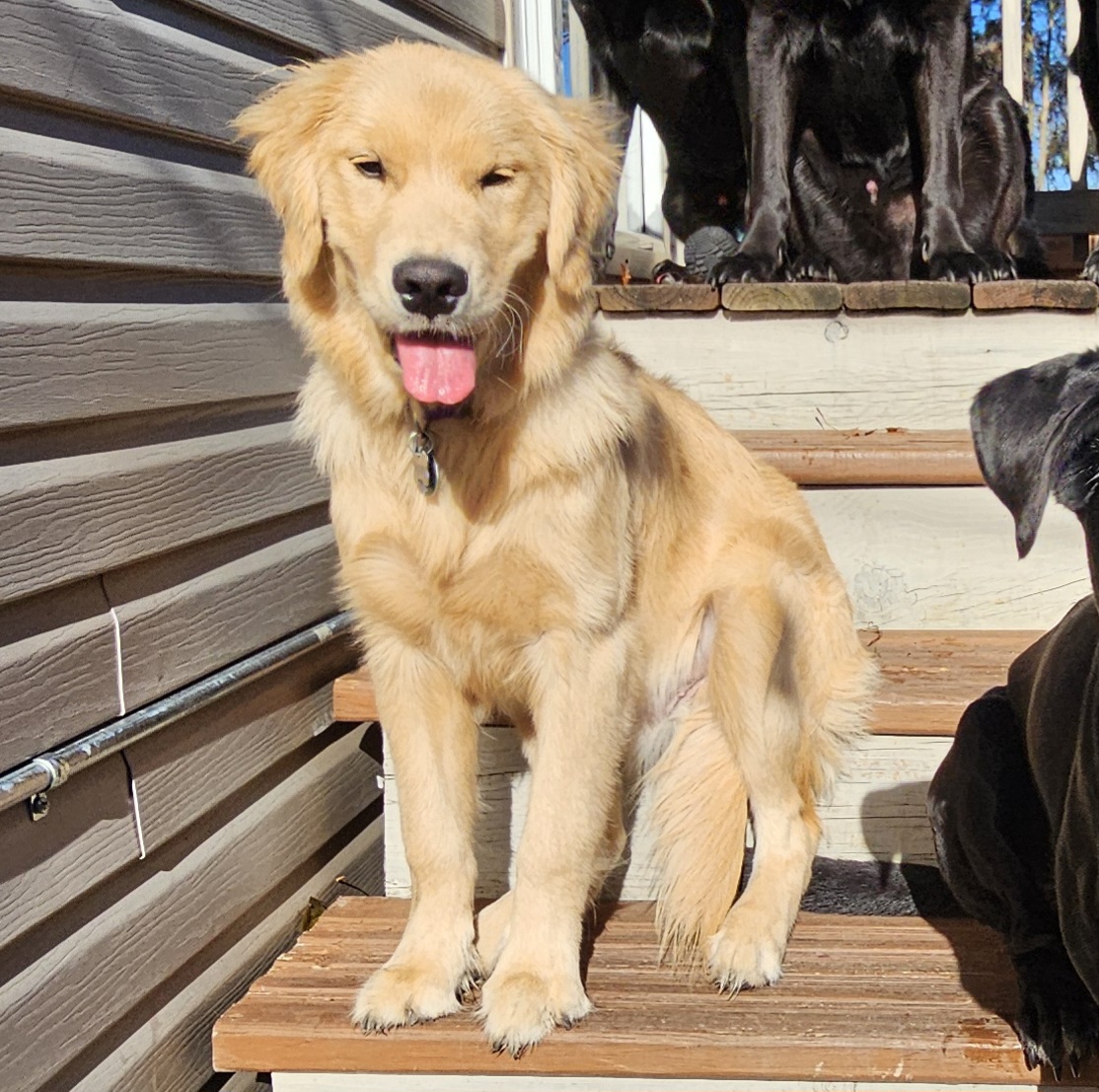
If your dog backs away, hides, or runs the moment the harness comes out, you’re not alone. Many dogs develop anxiety around handling — especially when something goes over their head or tightens around their body.
The good news? With the right approach, any dog can learn to feel safe, relaxed, and even excited about their harness.
This guide explains why harness avoidance happens and shows you exactly how to fix it using reward-based acclimation and fear-free handling methods.
🎬 Why Dogs Become Afraid of Their Harness
Dogs can develop negative associations with harnesses for several reasons:
-
😵 Over-the-head fear — Many dogs dislike equipment moving near their face.
-
😣 Past discomfort — Putting the harness on without being gentle or accidentally pinching hair or skin in a buckle.
-
🚫 Rushing the process — Putting the harness on too quickly or forcefully.
-
🐶 Lack of early handling training — Common in rescues and under-socialized dogs.
These experiences can build up until “harness = danger,” causing your dog to avoid you with a harness — even if he loves walks.
🍗 Step 1: Build a Positive Association with the Harness
Your goal is simple: Harness appears → good things happen.
-
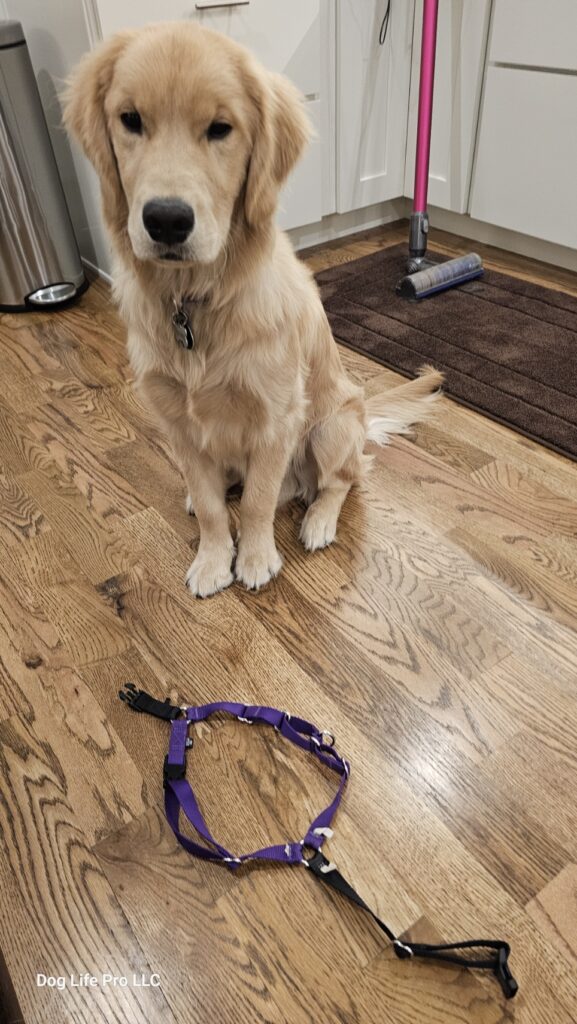
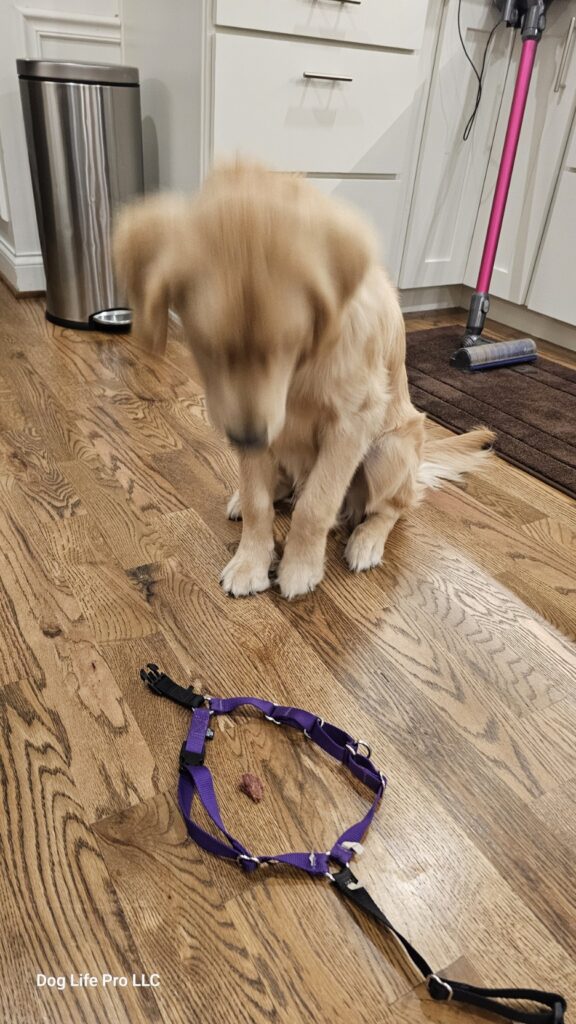
Place the harness on the floor.
-
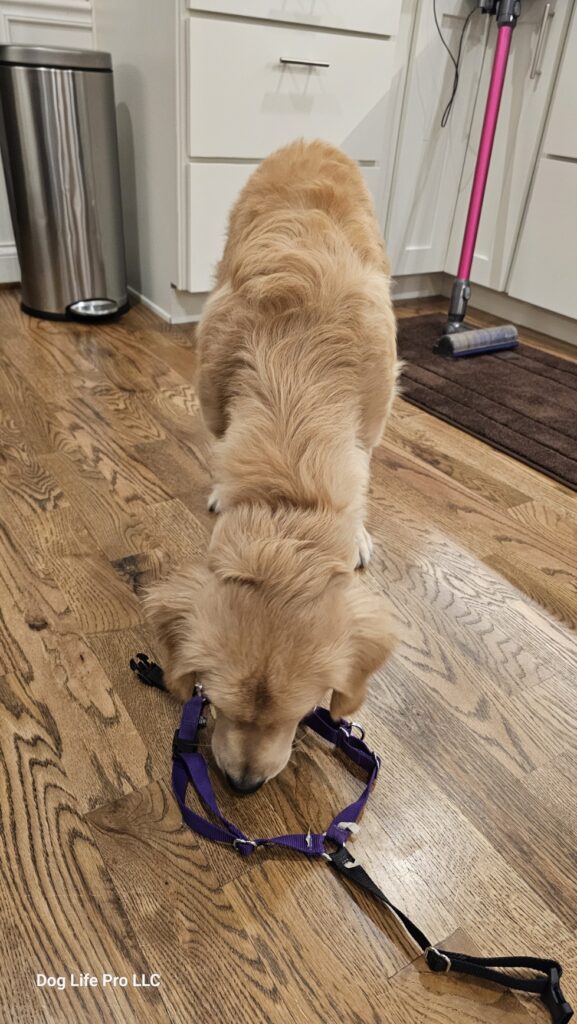
Put a few treats in the middle of the harness and let your dog eat them out of the middle.
-
Do 1 set of 5 repetitions, 2 or 3 times a day.
-
You can even put his harness around his dinner bowl at mealtime.
-
Put the harness out of sight when done.
-
When your dog looks excited to see the harness come out of its away place, try putting the harness on the ground with no treats in the middle to see if he’ll approach and sniff or touch the harness on his own. If he does → immediately praise and reward (reinforce): “Good boy” and treat.
-
Continue doing this for a few more days.
Ideally, you will not force the harness on him or chase him to put it on when you’re not acclimating and need to take him out. I suggest buying one harness for use and one for acclimation. Buy yellow or blue for acclimation — the two colors dogs can see.
🧩 Step 2: Take Baby Steps
Reward small steps on the way to getting the harness on and snapped. Don’t get too excited and just go for it. Instead, just hold up the harness with one hand, hold a treat in the other and put it through the loop of the harness. My demonstration video is very condensed just to give you a visual of my description. Here’s a step-by-step of what you should actually do:
Do 2 or 3 sets per day, 5 repetitions each set, for each of steps below. Don’t forget to say “Good Boy” each repetition, right before your dog eats the reward (treat).
-
Feed your dog by putting the hand with the treat through the loop.
-
Now have your dog come take the treat from your hand while your hand is through the loop in the harness.
-
Repeat the above, but with your treat hand closer to you, so your dog has to put just his nose through the loop.
-
Now. move your treat hand even closer to you, so your dog has to put his face through the harness loop.
-
You’re almost there. Hold the treat so your dog has to put his whole head through the loop. This is where you want to be cautious not to rush. Do a few extra reps before you allow the harness to fall on your dog’s neck.
-
When you’re positive your dog shows little to no hesitation or anxiety putting his whole head through, gently place the harness on his neck. Immediately praise and reward and then quickly remove the harness.
-
If you made it to here, you’re rounding third base! Repeat the previous step, but leave the harness on your dog’s neck, and slowly go for snapping the buckle while you continue to praise him in a happy voice. If you get the harness buckle clipped, immediately start your walk.
This should be fun for your dog. If you look concerned, your dog will read your face. Smile and make a game out of it by sounding jolly.
🙅♂️ Step 3: Avoid Forced Handling (and Why It Matters)
This is the catch-22. You want to take it slow, not rush your dog, and allow her to acclimate to the harness at her own pace, but you also need to get her out for a walk. Ideally you have a fenced yard for relief, but if you have a puppy, you’re then missing out on socialization opportunities that the walk provides. My best advice is:
-
Plan ahead by getting your dog in a confined area, so you don’t end up in a game of chase throughout several rooms.
-
Even better, use some trickery, like stuffing the harness in between couch cushions, inviting your dog onto the couch, and then putting the harness on.
-
Approach your dog on your knees or sit on your butt and see if she’ll come to you with a food lure.
-
Remain calm and smile throughout. Laugh or talk to your dog in a sweet voice.
-
Be gentle when handling her.
-
Practice more than 2 or 3 sets each day if you have the time and try to keep the sessions short to accelerate progress.
-
Put your hand behind the buckle/clip, so you don’t accidentally pinch her and cause a huge setback.
At this point, if you’re still struggling, you should reach out for professional help by contacting a CCPDT-certified trainer.
🔁 Step 4: Add a Predictable Routine
Dogs thrive on structure, and a predictable routine helps to remove anxiety.
Try this simple sequence:
-
After you clip the harness, say, “walk time,” or any short word or phrase of your choice. Say it every time after snapping the clip and be ready to go out the door.
-
After some time, try saying the phrase as soon as the dog sees the harness. You should see excitement and a desire to begin the walk, which is a reward itself.
Once the pattern is consistent, the harness itself becomes a joy cue.
👀 Watch for Stress Signals During Training
You’ll know your dog is feeling overwhelmed if you see:
-
Lip licking when your dog hasn’t just eaten something
-
Yawning outside of sleepy times
-
Turning head away
-
Backing up
-
Freezing
-
Moving slowly
If you see any of these, go back one step and practice more. Try using extra special rewards like shrimp, salmon, or steak.
For a deeper understanding of canine stress, see my full article on the Stress Escalation Ladder.
🦴 Final Thoughts
Use an EasyWalk harness. I can’t stress enough how many dogs this harness has helped. It doesn’t just thwart pulling on leash and give you more control — it also gives a dog a greater sense of freedom.
If your dog runs when he sees the harness, he’s not being stubborn — he’s communicating fear, uncertainty, or past discomfort.
With predictable cues, tiny steps, and reward-based shaping, your dog can learn that the harness predicts treats and walks.
Celebrate small wins and advance at your dog’s pace.
