🏠 The Purpose of Crate Training
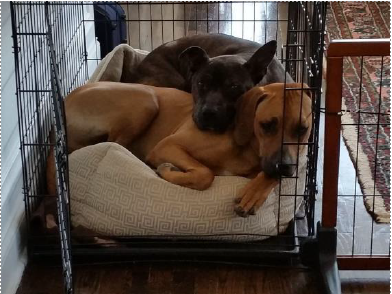
A properly introduced crate becomes your dog’s personal den and serves as a place to relax, nap, or feel safe when life gets busy, during thunderstorms, fireworks, or the like.
Crate training isn’t about confinement, it’s about comfort, structure, and teaching independence.
Benefits of crate training include:
-
Safety: Prevents destructive behavior or injury when unsupervised during puppyhood.
-
Potty training: Dogs naturally avoid soiling where they sleep so the crate is essential when potty training.
-
Travel readiness: Makes vet visits, boarding, and car rides less stressful for some dogs.
-
Calm confidence: Helps dogs learn to settle and self-soothe.
When done right, your dog will view the crate as a peaceful retreat, not a punishment.
🐶 How to Help Your Dog Love Their Crate
Crate training works best when your dog learns that the crate means good things happen here. Follow these steps for success.
1. Pick the right location.
At first, place the crate where you and your family spend most of your time, near a couch or your bed.
2. Make it cozy.
Add blankets or pillows for comfort (and accept they may get chewed).
3. Add familiar scents and toys.
Place a few safe toys inside. For puppies, use a Kong with a frozen treat to keep them happily occupied. Err on the side of too large to prevent it from becoming a choking hazard. They come in several sizes.
4. Feed in the crate.
Serve meals and water in the crate to build positive associations.
5. Leave the door open.
During the day, let your dog come and go freely in and out of his crate. This helps them choose the crate on their own. If your dog shows anxiety near the crate, bungee the door open so they don’t panic if it accidentally closes on them.
6. Do some acclimation exercises.
Sit on the floor a few feet away from the open crate and toss a treat into the crate so your dog has to go in to retrieve it. Repeat. If your dog won’t go in to get it, toss the treat just outside of the crate and then slowly further into the crate as you see your dog’s comfort level increase.
7. Don’t rush it!
Rushing will set back progress. Some dogs take quickly; others take time. Move at your dog’s pace.
👉 This early phase is called crate acclimation. It can take days or weeks, depending on your dog’s temperament.
⏳ The Crate Training Conundrum
Here’s the challenge: you need the crate for potty training, but you’re still teaching your dog to enjoy it.
The key is balance and structure without rushing.
-
Expect some whining and barking at first. Stay patient and consistent.
-
When not in the crate, give your dog plenty of physical exercise and mental enrichment (foraging mats, treat puzzles, play with other puppies).
-
Ensure all needs are met before crating: potty, food, play, affection, and a clean bill of health.
-
Never open the crate door while your dog is whining or barking. Doing so teaches them that noise gets results, and the behavior will persist.
The process takes time, but science shows it works.
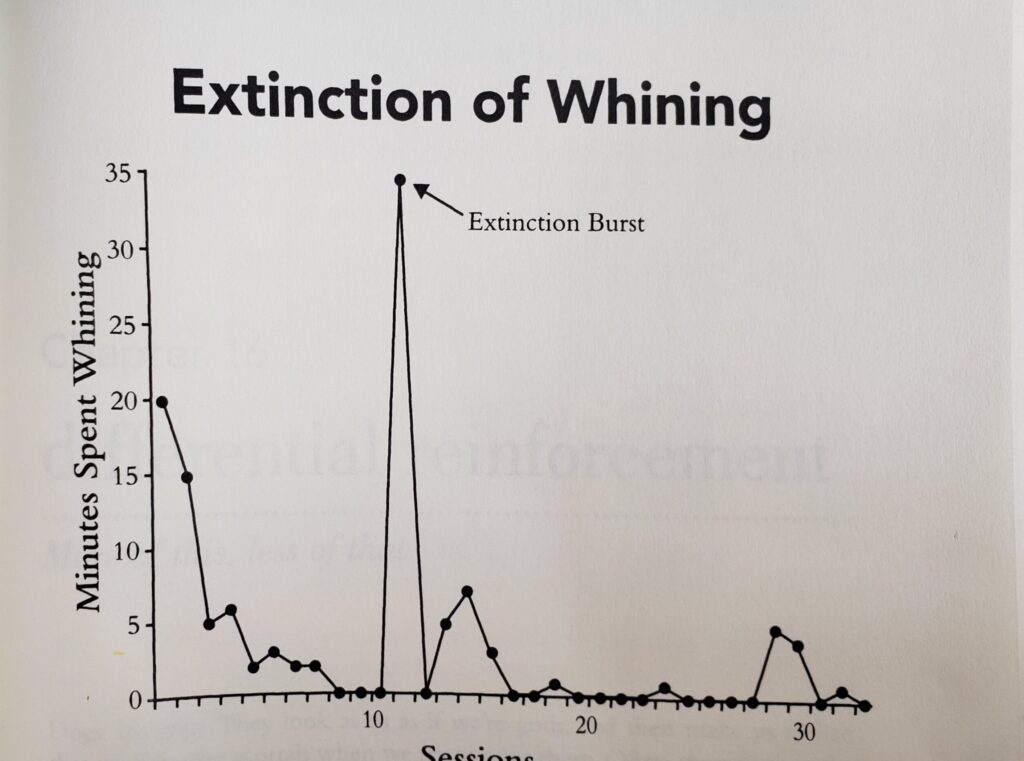
According to How Dogs Learn by Mary R. Birch Ph.D. and Jon S. Bailey Ph.D., most dogs stop whining and barking within 30 days, I’ve often seen sooner. Their extinction chart shows a short “extinction burst” (a temporary increase in barking on day 11) before behavior drops off completely. Completely normal and to be expected.
💤 A Peaceful Place They’ll Choose on Their Own
-
When crate training is done properly, your dog will go into their crate voluntarily after play or meals because it feels safe and familiar. It becomes their den, their bedroom, their space.
-
Crates are not cages. They’re comfort zones that promote calmness, structure, and emotional security.
-
If you ever feel discouraged during the process, remember: your goal isn’t to “lock up” your dog, it’s to give them a place where they can rest, reset, and relax.
